
Land Clearing & Site Preparation in Bonner County, ID
Local Land Clearing Expertise
Around Sandpoint and the Selkirk Mountain foothills, land clearing service and excavating contractor work looks different than flatland jobs. You're managing steep terrain, dense forest cover, and property lines that wind through wildlife habitat and watershed areas. This page covers what land clearing service and excavating contractor expertise means for your property in Bonner County, ID—from forest thinning to logging cleanup to making room for building or land restoration.
Proximity to local geology and permitting rules matters. So does knowing which equipment reaches a Clark Fork or Priest Lake–area lot safely.
How We Work
A four-phase approach from site walk-through to final grade.
Our Process
Land clearing here starts with understanding what lives on your land. We walk the site, identify trees worth keeping, check soil stability on slopes, and confirm easement and permit boundaries. Bonner County wetland and waterfront rules affect almost every property near Lake Pend Oreille or tributary drainages.
Site Assessment
Walk the property, document tree types, check slope stability, and flag protected areas like wetlands or stream buffers. Critical for Sandpoint and Priest Lake–area lots.
Permit Planning
Coordinate with Bonner County Planning for land disturbance permits. Forest Service or county easement review if applicable. Timing: 2–4 weeks depending on scope.
Clearing & Removal
Cut, fell, and haul timber or mulch debris on-site. Use tracked equipment for steep terrain. Protect drainage during Kootenai River watershed work.
Grade & Finish
Final grading, stormwater management, and site stabilization. Seed or place erosion control if needed. Final inspection and permit sign-off.
You'll always know what's happening next—and when.
Our Services
From forest thinning to building-site prep across Bonner County.
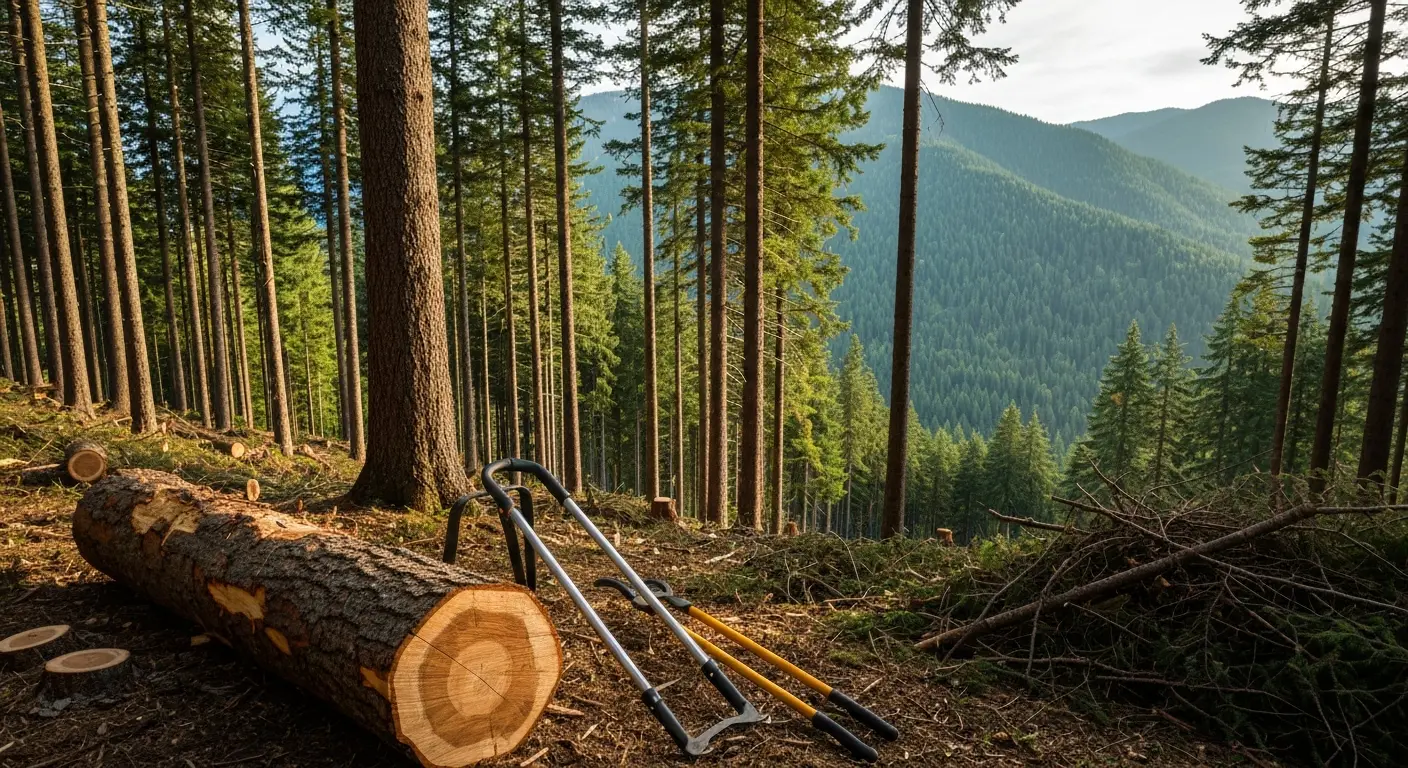
Forest thinning work on steep slopes near Clark Fork, reducing fuel load and promoting understory health.
Forest Thinning & Fuel Reduction
Remove small-diameter trees and dense undergrowth to reduce wildfire risk. Bonner County sits in a high-hazard zone; thinning work is encouraged by county and federal programs. We mark trees to keep, chip debris on-site, or arrange haul-off.
Wildfire-hardening strengthens property value and safety.
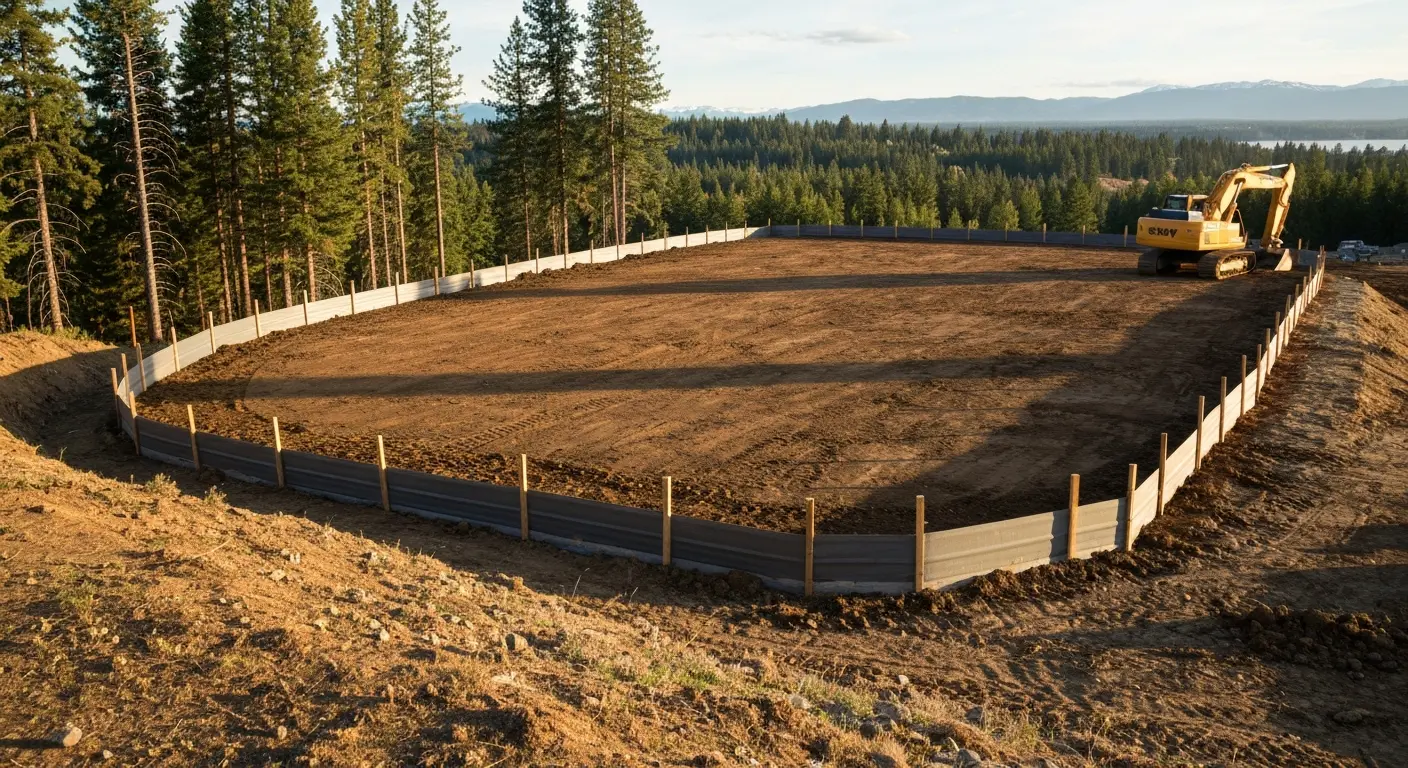
Building pad clearing and grading near Sandpoint, with sediment control measures in place.
Building Site Prep
Clear trees, level building pads, and remove stumps. Bonner County land disturbance rules require stormwater and erosion control. Slopes over 30% need engineered grading. We handle setback compliance and stream-buffer protection.
Permits pull faster when prep work is compliant from the start.
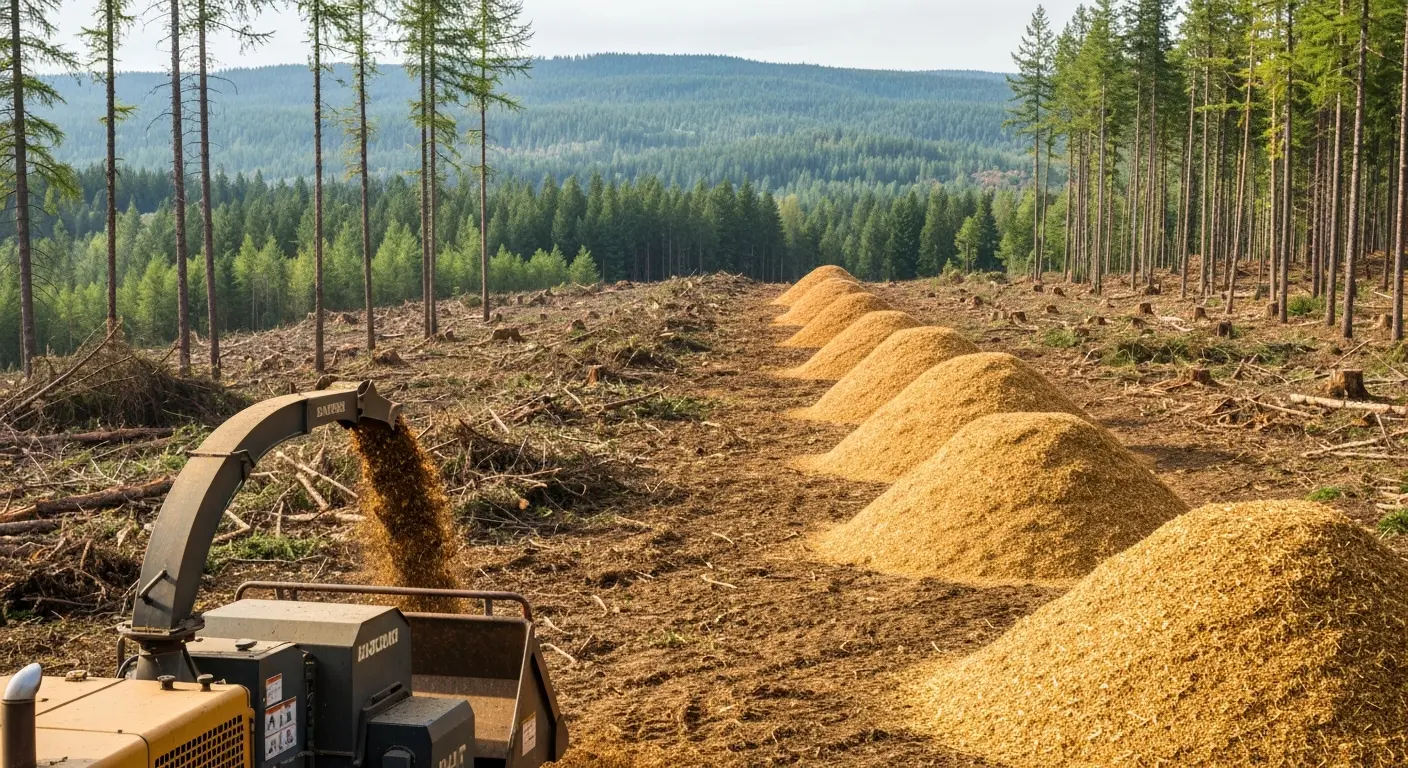
Post-logging cleanup and forestry mulching near Priest River, converting slash to usable chips.
Logging Cleanup & Forestry Mulching
Remove slash, fell hazard trees, and chip debris into mulch. Bonner County has active timber operations; cleanup prevents erosion and opens land for future use. Mulch stays on-site or hauls away depending on your plan.
Clean ground means lower insurance and faster resale.
Why Local Expertise Matters
Bonner County land clearing isn't one-size-fits-all.
Terrain & Geology
Bonner County is 77% forested with slopes that exceed 30% across much of the Selkirk range. Equipment must be tracked or light-footed; standard wheel loaders can't move on steep wet ground. Access roads often cross seasonal drainages or forest-service easements.
Wetlands & Water Rules
Most properties near Lake Pend Oreille, Priest Lake, or tributary drainages have wetland or stream-buffer overlays. Bonner County requires stormwater plans and erosion control. Idaho Department of Water Resources oversees in-stream work.
Permit compliance isn't paperwork—it's the difference between a 4-week project and an 8-week delay. We know the county Planning office and the right sequence.
Tree Species & Value
Ponderosa pine, larch, and cedar are common. Some properties qualify for timber-exemption tax breaks if managed as forestland. We identify valuable trees, plan selective cuts, and document management for county assessor records.
Coverage & Directions
Serving unincorporated Bonner County and nearby towns.
Primary Service Areas
Sandpoint & East Shore
Lake Pend Oreille shoreline, Sagle, Kootenai, and Selkirk foothills lots. Heavy forest cover, waterfront permits, and tight access roads are standard.
Clark Fork & Hope
Eastern Bonner County on the Clark Fork River. Hunting and fishing land common; logging cleanup and fuel reduction frequent needs.
Priest River & Priest Lake
Northwestern Bonner County. Remote properties, steep terrain, and year-round access challenges make contractor reliability critical.
Dover & Ponderay
Pend Oreille River corridor south of Sandpoint. Residential growth, septic clearing, and site prep drive most requests here.
Getting Here
Most work is on-site at your property, but if you need to meet us in person: Sandpoint is the county seat, 30 miles north of Coeur d'Alene on US-95. Downtown is near the Panida Theater on First Avenue. Priest River is 25 miles north on US-2; Clark Fork is 45 miles east on Hwy 200. Winter road conditions on mountain passes can add 20–30 minutes; call ahead during November–March.
We mobilize equipment from multiple staging areas across Bonner County. Most properties can be reached within 2–3 hours of scheduling.
Common Questions
Do I need a permit for forest thinning in Bonner County?
Yes, for any work on slopes over 15% or within 200 feet of water. Bonner County requires a land disturbance permit. We handle the paperwork and coordinate with Planning staff.
What if my land has a timber exemption?
Good—timber exemption properties must be actively managed. We can help document thinning and harvesting activity for the county assessor. Exemption rules require a timber management plan; we recommend one before starting work.
How fast can you start?
Depends on permits. If no permit needed, 1–2 weeks. With permits, 4–8 weeks. Winter weather in Bonner County can add time. Call with your target date and we'll give you an honest timeline.
Can you haul away chips and logs, or do they stay on-site?
We can do both. Chips stay for erosion control or mulch; logs haul to mills or salvage yards. On-site chipping is faster and cheaper. Haul-away costs depend on debris volume and road access.
Does stump removal come with clearing?
Not always. Leaving stumps in place saves cost and helps prevent erosion. Grinding or pulling adds labor. We assess your site and recommend what makes sense for your next step—building, planting, or leave as-is.
What happens if my lot has a wetland or stream buffer?
No work happens inside protected buffers. We map them during site assessment, design work around them, and get written approval from county. Stream buffers are usually 200 feet in Bonner County.
DISCOVER WHAT OUR CUSTOMERS HAVE TO SAY ABOUT US
REVIEWS
proudly serving these areas
Bonner County, ID
Boundary County, ID
Kootenai County, ID
READY TO take the next step?
get a free quote TODAY!
QUICK LINKS
our services
service areas
operating HOURS
Mon: 6:00 am - 7:00 pm
Tue: 6:00 am - 7:00 pm
Wed: 6:00 am - 7:00 pm
Thu: 6:00 am - 7:00 pm
Fri: 6:00 am - 7:00 pm
Sat: Closed - Closed
Sun: Closed - Closed